
A martial-arts game under NetEase, Where Winds Meet 燕云十六声, has been engulfed in controversy after the release of its anniversary outfit “Fei Bai Cheng Shi” 飞白成诗, specifically the female version. Players criticized the design for resembling lingerie and for being wearable by a protagonist canonically defined as a 16-year-old minor. What began as an aesthetic dispute quickly escalated into a large-scale backlash, with the debate centering on three intertwined issues: the sexualization of minors, the perceived degradation of traditional culture, and what players see as perfunctory and evasive responses from the developer.
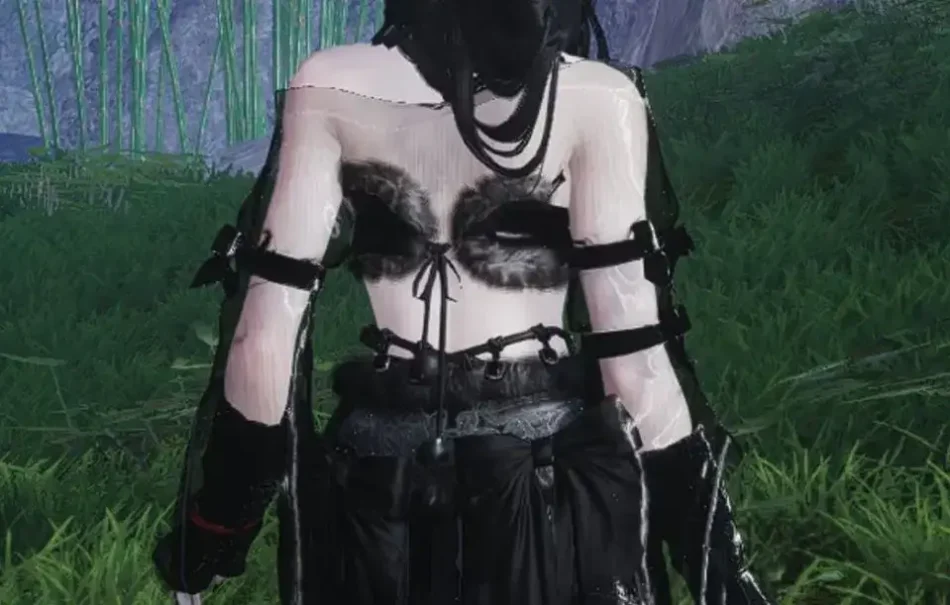
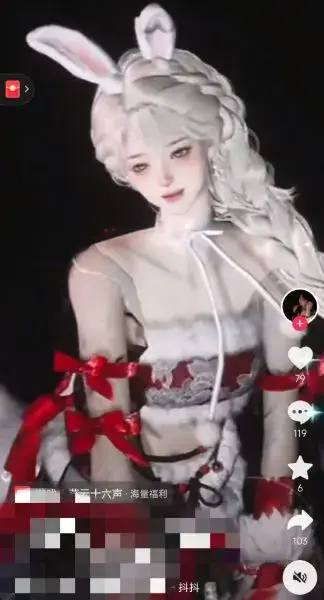
At the heart of the controversy is the outfit’s design itself. While the game’s main character is explicitly set as an underage teenager, the female costume features a backless halter-style top with thin straps, semi-transparent gauze, a bow accent on the hips, and torn, underwear-like bottoms. After dyeing, particularly in red-and-black color schemes, the outfit was widely said to resemble erotic lingerie, and in actual gameplay animations it reportedly risks revealing unintended angles. By contrast, the male version of the same anniversary outfit is fully covered and conservative, prompting accusations of blatant gender double standards.
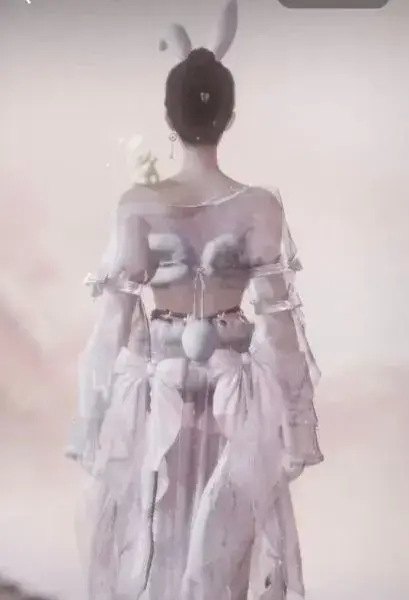
The name “Fei Bai” is borrowed from feibai, a distinctive calligraphic style famously associated with Empress Wu Zetian and her inscription on the Stele of the Ascending Immortal Crown Prince, often praised as “the greatest calligraphy by a woman under heaven”. Traditionally, the term evokes strength, elegance, and refined cultural spirit. Players argue that applying this name to a design perceived as sexually suggestive reduces a revered cultural reference to vulgar innuendo. Matters were worsened by the international version’s promotional slogan, translated as “writing poetry with the body”, which many felt distorted overseas audiences’ understanding of Chinese traditional aesthetics.
Although the outfit was officially marketed as winter-themed, the female version consists of thin fabrics and a short skirt that appear entirely impractical for cold weather. Critics interpreted this mismatch as deliberate pandering to “borderline” sexualized tastes rather than an honest design choice.
Many organized collective consumer actions, including suspending in-game spending, issuing electronic invoices, and filing complaints with cultural regulators. On the Hei Mao consumer complaint platform alone, more than 377 collective reports were lodged, demanding the outfit’s removal and the elimination of sexualized elements such as neck ribbons and hip bows. High-spending players also joined the pushback, with some publicly sharing records of having spent over 1,400 yuan to stress that financial support does not equate to tolerance for what they see as lowbrow design. These players urged partner organizations, such as the China Youth Development Foundation and the MoZi satellite project, to reconsider their collaborations. Notably, state media outlets reportedly removed earlier favorable coverage of the game amid the controversy.
Beyond immediate demands, players articulated a broader set of systemic reforms, including a full redesign of the disputed outfit, changes to the female character’s pigeon-toed standing pose and manicure aesthetics, and the establishment of a review mechanism led by female designers. In total, players put forward thirteen specific rectification requests, framing the issue as structural rather than incidental.
NetEase’s responses did little to defuse tensions. The initial “optimization” merely adjusted strap gaps and reduced fabric transparency, which players dismissed as superficial. The contrast with the male outfit, entirely covering the body, led to renewed accusations of valuing male modesty over female dignity. A second update introduced a “tailoring” option that allowed players to add trousers, but the original contentious design remained available. Critics argued this move shifted responsibility onto players instead of addressing the core problem.
At launch, the game had publicly committed to avoiding sexually suggestive female designs. The anniversary outfit was thus seen as a betrayal of the game’s self-positioning around cultural heritage and restraint. Timing also proved sensitive: the outfit debuted on December 24, coinciding with the 75th anniversary of victory in the Battle of Chosin Reservoir, and incorporated red-and-green bow elements reminiscent of Christmas. Some players accused the release of pandering to foreign aesthetics while showing disrespect for historical memory. Although the design was later pulled from the domestic server for revision, the original version reportedly remained on international servers, intensifying debates over cultural export and backlash.
While virtual clothing that sexualizes minors may be difficult to prosecute as a criminal offense, lawyers note that it likely violates China’s Law on the Protection of Minors and the principles of 12+ age classification. Media commentary has warned that chasing short-term engagement through suggestive design risks long-term brand damage. Industry analysts further caution that tactics such as surprise releases with no prior warning, especially around holidays, amount to testing player tolerance and could create a vicious cycle in which “borderline” content is used to prop up revenue, ultimately squeezing out teams committed to higher-quality, value-driven creation.