
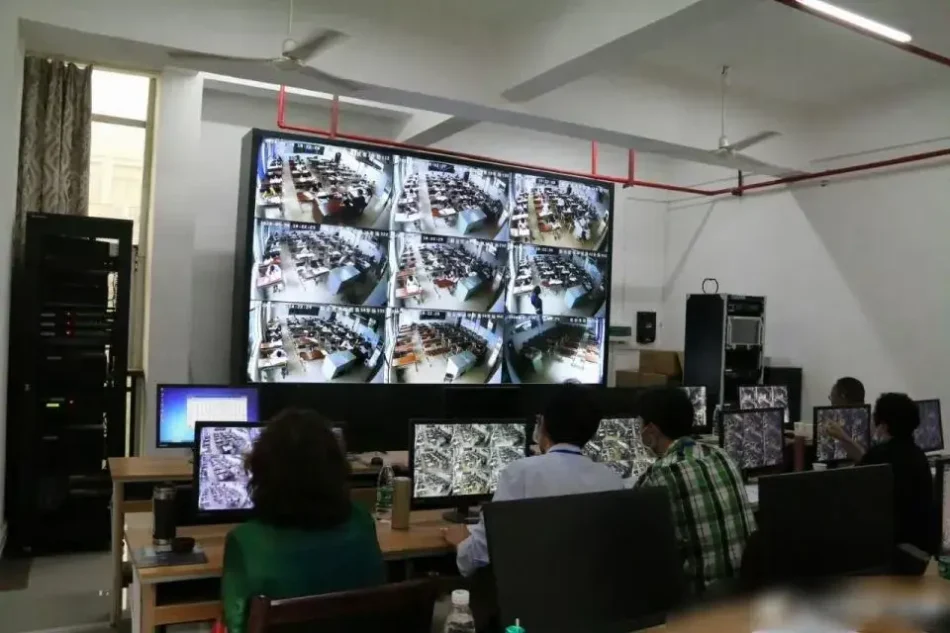

As China’s 2026 National College Entrance Examination (Gaokao 高考) gets underway, a new generation of “AI invigilators” has been deployed across examination centers in many regions. Contrary to popular imagination, these are not robots walking through classrooms. Instead, they are sophisticated intelligent monitoring systems operating behind the scenes, helping safeguard exam integrity through a combination of algorithmic detection and human review.
The AI invigilation system is designed to assist rather than replace human supervisors. It functions as a technological extension of the existing examination monitoring framework, working alongside classroom invigilators, video surveillance staff, and mobile inspection teams. Powered by high-definition cameras, backend processing equipment, and artificial intelligence algorithms, the system continuously analyzes activity in examination rooms and helps identify potential violations in real time.

One of its most notable capabilities is the ability to recognize approximately 40 types of unusual behavior. Using advanced computer vision technology, the system can detect actions such as repeatedly turning one’s head, whispering to nearby candidates, passing suspicious objects, keeping hands under the desk for extended periods, or lowering the head in an unusual manner. At the same time, the technology is not limited to monitoring students. It also supervises examination staff by identifying behaviors such as leaving assigned posts, engaging in conversations during supervision, or failing to perform required procedures on schedule. This dual monitoring approach strengthens accountability and reinforces examination discipline.
To ensure fairness and accuracy, the system follows a strict “alert-review-verification” process. When AI detects a potentially suspicious action, it automatically captures relevant video footage and sends an alert to video monitoring personnel. Human reviewers then assess the situation before deciding whether further investigation is necessary. If concerns remain, a mobile invigilator may quietly enter the examination room to verify the circumstances. Any final determination regarding rule violations is made by the examination administration team. The AI system itself never directly labels a candidate as cheating.
Authorities have emphasized that candidates should not feel anxious about normal movements during the exam. The system generally requires unusual behavior to persist for a certain period, such as five seconds, before generating an alert. Ordinary actions like adjusting glasses, scratching one’s head, or briefly looking around are typically filtered out during human review. Moreover, alerts are displayed only on monitoring room computers and do not disturb students while they are taking the examination.