
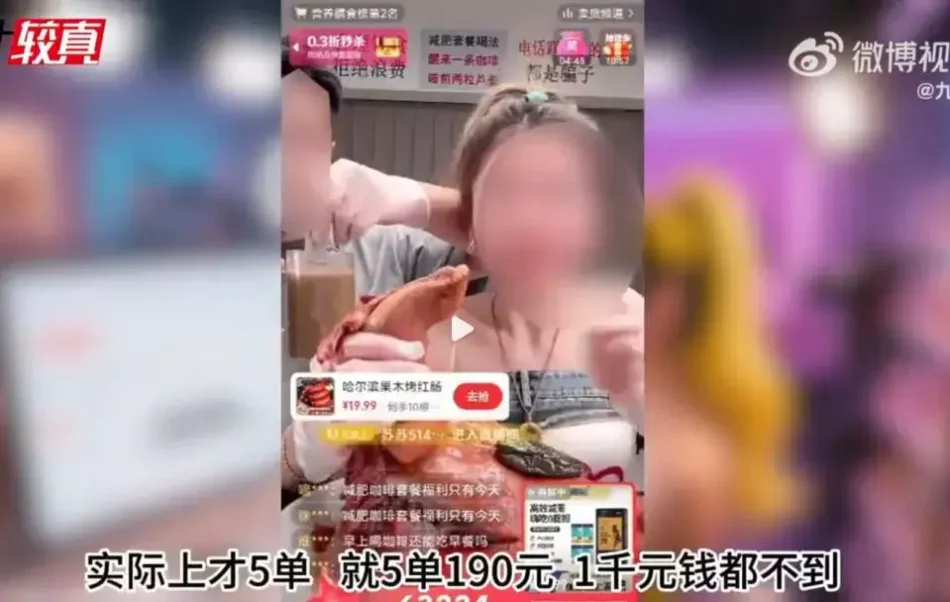

A food merchant surnamed Chen in Shanghai recently became the focus of public attention after a live-streaming sales cooperation turned into an alleged fraud case. Chen spent 30,000 yuan to invite a well-known food influencer, known as “X Jie Ai Mei Shi”, with more than 14 million followers to promote kudzu root powder during a live broadcast. On the surface, the livestream looked highly successful, with the platform showing 599 orders completed. In reality, only four of those orders were genuine, and Chen ultimately received less than 700 yuan in actual sales revenue. Subsequent backend data revealed that 586 orders were fabricated by employees of the influencer’s own team, triggering an official investigation and a wave of criticism about the chaos in the live-streaming e-commerce industry.
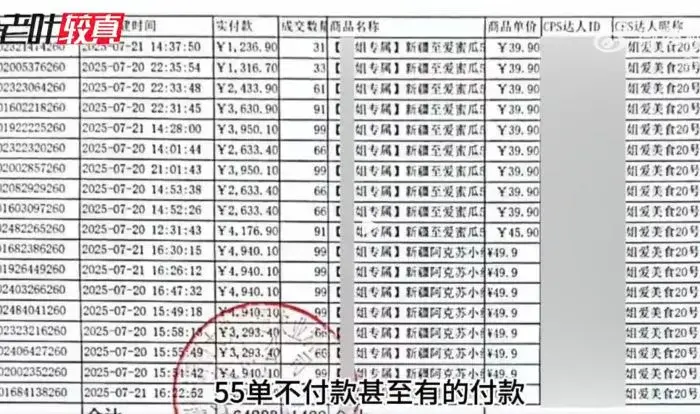
According to evidence obtained after the event, the fake transactions were highly concentrated and clearly traceable. One employee of the influencer’s company placed 141 orders, using a delivery address that matched the company’s registered address, while three other team members placed 165, 135, and 145 orders respectively. Similar behavior was found in another collaboration involving a “booked venue” livestream in Xinjiang, where a contract worth more than 200,000 yuan supposedly generated 1,429 orders, yet the actual sales revenue was under 100,000 yuan. In Chen’s case, after paying the 30,000 yuan participation fee, his real return was only 676.6 yuan, an investment return rate of less than 2.3%.
The merchant attempted to defend his rights by reporting the matter to regulators. On December 25, 2025, the Shanghai Baoshan District Market Supervision Bureau formally opened a case, citing suspected organization of false transactions in violation of the Anti-Unfair Competition Law. Under mounting public pressure, the influencer’s team refunded the 30,000 yuan participation fee on January 6, 2026. Despite the controversy, the influencer’s account, with more than 14 million followers, continues to broadcast normally and had previously been exposed for promoting products containing laxative ingredients.
The incident has reignited debate over long-standing problems in the live-streaming economy, particularly the industrialization of data fraud. Analysts estimate that the influencer’s real conversion rate was only about 0.0003%, far below the industry’s normal range of 1% to 8%, suggesting that a large proportion of followers may be inactive or fake. On the gray market, tens of thousands of robot followers can be bought for a few dozen yuan, while coordinated “brushing” packages allow teams to simulate explosive sales at extremely low cost. In many cases, commissions are calculated based on displayed order volume, allowing losses to be passed entirely onto merchants.
Merchants are frequently lured by verbal promises such as “guaranteed thousands of orders”, while the written contracts only state that the influencer will “provide live-streaming services” without guaranteeing any sales results. Some agreements are even signed through shell agencies with little or no paid-in capital, making accountability difficult. When disputes arise, influencers often argue that they merely collected appearance or slotting fees and deny responsibility for sales performance.
Similar cases have surfaced across the country. A beer distributor in Heilongjiang paid tens of thousands of yuan plus commission, only to see a 90-second livestream generate a single order. A shoe merchant in Henan paid a 50,000 yuan slotting fee, prepared inventory worth millions, and sold just 58 pairs. A cosmetics supplier in Shandong paid 300,000 yuan in commissions, only to have all orders refunded and real sales drop to zero. These repeated incidents underscore that Chen’s experience is not an isolated case but part of a broader pattern.