
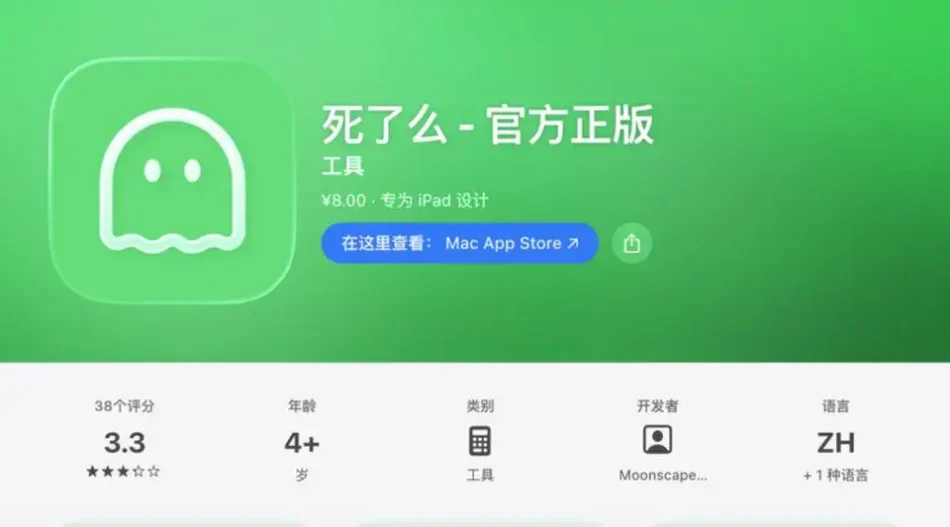

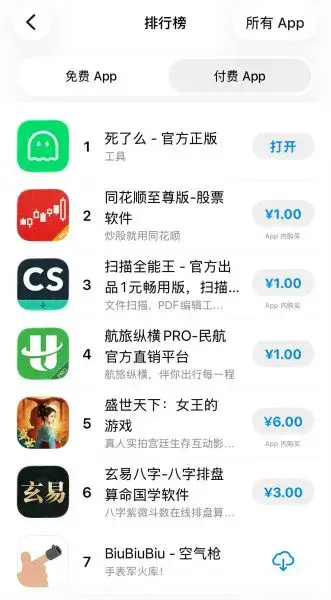
In just 48 hours, the paid user base of the app “Did I Die” surged by 200 times, propelling it to the top of Apple’s paid app rankings. This figure was confirmed by the founder, Mr. Guo, to several media outlets. The sudden explosion was not driven by sophisticated technology or aggressive marketing, but by the app’s precise targeting of a deep-seated anxiety shared by China’s 123 million people who live alone: the fear of dying unnoticed. Multiple reports estimate the credibility of these numbers at around 70%, yet even with that caveat, the speed and scale of the growth were striking.
The app’s commercial performance has been equally eye-catching. Initially priced at one yuan, it was later raised to eight yuan without dampening downloads, and it quickly achieved profitability while maintaining its position at the top of both the overall paid chart and the utilities category. The founding team, composed of three post-95s developers working part-time, spent less than a month creating the app. Their upfront costs amounted to just over one thousand yuan, mainly for server rental and app store listing fees, and they invested nothing in marketing. The idea itself originated from online discussions about the risks of living alone. By adopting a blunt, darkly humorous name and a minimalist feature set, the app spread virally across social platforms, snowballing into a phenomenon few had anticipated.
At its core, the app works in a disarmingly simple way. Users bind an emergency contact’s email address and manually check in once a day. If they fail to do so for two consecutive days, the system automatically sends an alert email. The design deliberately avoids registration hurdles and does not collect location data, appealing to users who value privacy. Yet these same choices have also drawn criticism. Relying solely on email notifications is problematic in a country where open rates are often below 35%, potentially delaying rescue. The app cannot detect sudden medical emergencies, falls, or loss of consciousness, and false alarms are common when users simply forget to check in. As a safety tool, its limitations are obvious.
The app’s name has proven even more controversial than its functionality. More than 60% of online commenters consider “Did I Die” ominous or inauspicious, and public figures have suggested softer alternatives such as “Still Alive”. At the same time, surveys show that nearly three quarters of younger users support the blunt phrasing, arguing that it breaks taboos around death and aligns with a generation accustomed to black humor. Meanwhile, copycat apps with near-identical functions have already appeared, some offering the service for free, underscoring how low the barriers to imitation are.
China’s population of people living alone continues to grow, with more than 60% aged between 20 and 39. Many users joke that they fear collapsing from overwork and being discovered only days later. For them, paying eight yuan is less a purchase than a trade for peace of mind. Some even list their company’s HR department as an emergency contact, half in jest, half in resignation, revealing how thin personal support networks can be in urban life.
The longer-term outlook, however, is uncertain. The technology itself is easy to replicate, and major platforms could integrate similar features almost overnight. A one-time payment model may also struggle to sustain growth, pushing the team toward subscriptions, hardware integration, or expansion into adjacent safety products. More broadly, scholars argue that the app’s popularity highlights gaps in public services: weak community care systems and insufficient support for both young single residents and the elderly. An app can signal distress, but it cannot replace social infrastructure. Ultimately, The irreverent humor with which young people approach death here is both a coping mechanism and a quiet act of resistance against an increasingly atomized society.