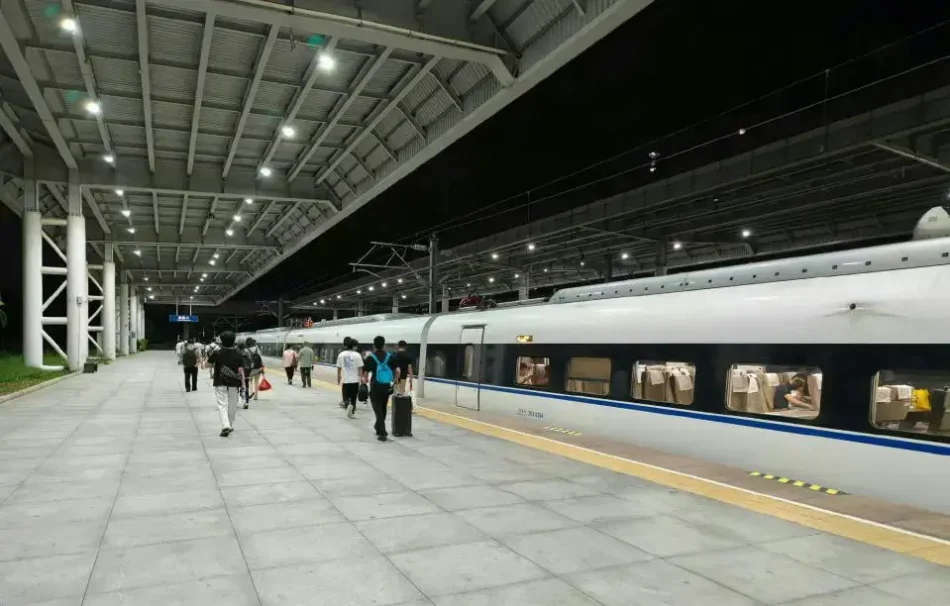

The incident unfolded on April 5, 2026, when a university student identified as Xiao Chen was traveling on a high-speed train from Hangzhou East to Fuyang West. During the journey, several children in the carriage ran around, screamed, and cried continuously for nearly an hour. Xiao Chen initially chose a formal route, reporting the disturbance to train staff. However, attendants only issued verbal reminders to the parents, which had little effect. After enduring the noise for an extended period, he finally stood up and shouted, demanding to know which family the children belonged to and questioning why the parents were not intervening. The carriage quickly fell silent. Later, he clarified that his frustration was directed at the parents’ failure to supervise, not at the children themselves, and admitted that his reaction was not ideal while also calling for better railway management.
Customer service representatives stated that onboard staff are only responsible for persuasion and lack the authority to enforce behavioral compliance. While “quiet carriages” have been introduced on some routes, the majority of standard carriages lack effective mechanisms to manage noise and disorder. This leaves a gap between passenger expectations of a reasonable environment and the actual tools available to maintain it.
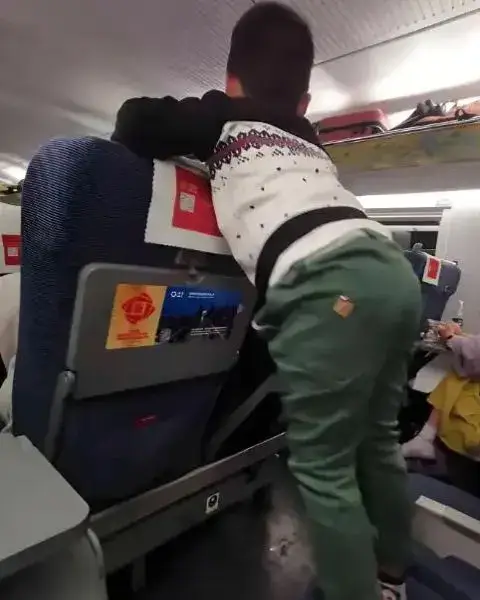
Many observers draw a distinction between infants, whose crying is often unavoidable, and older children who are capable of understanding behavioral boundaries. In this case and similar ones, criticism focused on parents who appeared indifferent, allowing disruptive actions such as kicking seats or disturbing other passengers without intervention. In some reported instances, parents even responded defensively when confronted, escalating tensions rather than resolving them. By contrast, examples of responsible parenting, such as bringing toys or books, calming children in designated areas between carriages, or apologizing to nearby passengers, are widely praised and seen as key to maintaining harmony in shared environments.
Supporters argue that Xiao Chen’s outburst was a last resort after reasonable efforts failed, and that it effectively addressed the root issue: lack of parental control. They emphasize that purchasing a train ticket implicitly includes the right to a basic level of quiet, and that standard carriages should not be treated as spaces where excessive noise is acceptable. Critics, however, view his shouting as a form of verbal aggression. Some psychologists suggest that using intimidation to restore order may create negative associations for children, potentially causing them to perceive public spaces as threatening. Others point out a perceived inconsistency in social enforcement, noting that adults who engage in loud phone calls or play media without headphones are often not confronted in the same way.
Underlying both perspectives is a broader issue with railway management systems. Existing regulations require passengers to supervise accompanying children, but they lack clear standards for acceptable noise levels or meaningful consequences for violations. As a result, enforcement depends heavily on informal persuasion rather than structured intervention. Public opinion increasingly calls for more practical solutions, such as expanding family-friendly carriages equipped with entertainment resources, or adopting international practices. For example, some countries designate areas where noise from young children is more tolerated, while also encouraging parents to temporarily step into connecting spaces when disturbances occur.