
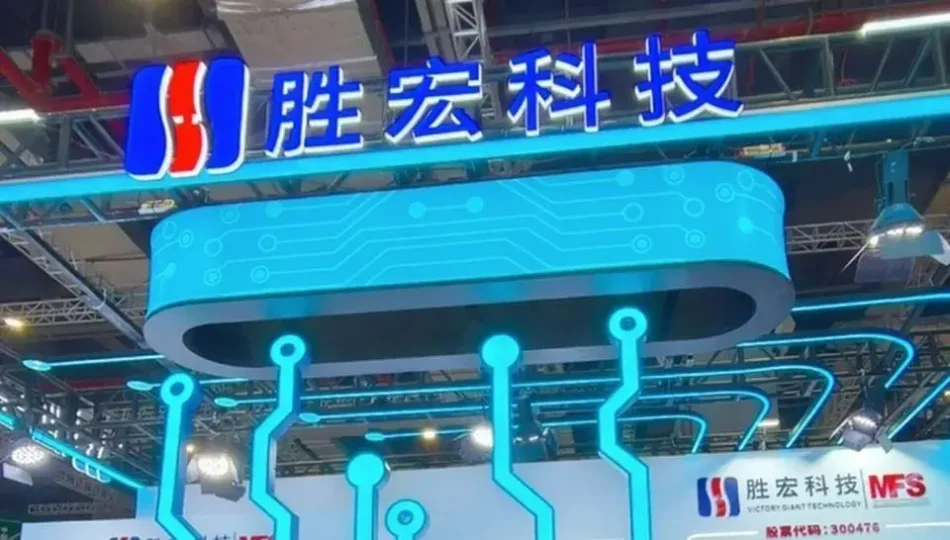

A controversy involving Shenghong Technology Chairman Chen Tao 宏科技董事长陈涛 and social media influencer Janice Song Zhenzhen 宋珍珍 has triggered intense public discussion in China, with attention focused not only on the personal scandal itself but also on its impact on investors and corporate governance.
The incident centers on an elevator surveillance video allegedly recorded in April 2025. Although the footage reportedly circulated briefly within limited financial circles in September 2025, it did not attract widespread attention until June 6, 2026, when it was publicly released online by Song Zhenzhen. Following the video’s publication, Shenghong Technology’s share price came under significant pressure, leading to a sharp decline in market value over the following trading sessions.
According to market data cited by Chinese financial media, the company’s market capitalization fell from approximately 359.8 billion RMB before the controversy to around 305.5 billion RMB by June 8, representing a loss of roughly 54.3 billion RMB in market value. The decline significantly exceeded the broader market’s performance during the same period. Reports also indicated substantial capital outflows from the stock and heightened concern among the company’s more than 270,000 retail shareholders.

Shenghong Technology has repeatedly stated that the online videos and related rumors are unrelated to the company’s operations. The company emphasized that business activities, customer orders, and production remain normal. Nevertheless, the market reaction highlighted how controversies involving senior executives can affect investor sentiment, regardless of whether the underlying business fundamentals have changed.
Chen Tao, the company’s chairman and founder, is widely recognized as a key figure behind Shenghong Technology’s rise as a major supplier of printed circuit boards (PCBs) used in AI servers. The company is often associated with the rapidly growing artificial intelligence infrastructure sector and has benefited from strong demand linked to AI computing and data center expansion.
Following the controversy, reports indicated that Chen had taken leave to address personal matters. Company executives responded by stating that some online claims were inaccurate and that law enforcement authorities had been contacted. The company also noted that regulators were aware of the situation and that any further disclosure requirements would be assessed according to applicable rules.
The other central figure in the controversy is influencer Janice Song Zhenzhen, whose social media accounts have attracted significant public attention. She has made a series of allegations concerning her relationship with Chen Tao, including claims about financial support, personal conduct, and family related matters. These allegations have circulated widely online but remain disputed. At the time of writing, many of the claims have not been independently verified, and the company has stated that several online narratives are inaccurate.
Beyond the personal aspects of the scandal, investors and analysts have increasingly focused on broader corporate governance concerns. One frequently discussed issue is the stability of the company’s controlling shareholder structure. Market participants have speculated that any future changes in family ownership arrangements could potentially affect control of the listed company, although no such changes have been announced.
Another concern involves information security and internal controls. Commentators have questioned how surveillance footage involving a senior executive could become public and whether the incident reveals weaknesses in confidentiality procedures. For a company operating at the center of the global AI supply chain, such questions have become part of the wider discussion about governance standards and risk management.
Some analysts caution against attributing the entire stock decline solely to the personal controversy. The broader technology and AI-related sectors experienced significant volatility during the same period, with numerous companies facing sharp corrections after extended rallies. From this perspective, the scandal may have acted as a catalyst that intensified existing market concerns rather than serving as the sole cause of the sell-off.
The episode has also generated widespread discussion among retail investors, many of whom expressed frustration over losses linked to the stock’s decline. Social media platforms became flooded with comments from shareholders, reflecting the growing intersection between internet culture, celebrity driven narratives, and financial markets. The incident quickly evolved from a personal dispute into a national conversation about investor protection, executive accountability, and the risks associated with founder-led companies.