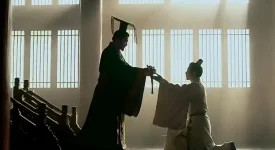


China’s micro-drama industry reached a new high point in 2025. A total of 33,000 micro-dramas were produced nationwide, up nearly 50% year on year, with 132 of them airing on television. By December, the number of adult micro-drama viewers exceeded 664 million, an increase of 4.5 million from the previous year, pushing penetration to 70.2%. Meanwhile, the sector’s global expansion has accelerated, with more than 300 Chinese micro-drama apps now available on overseas platforms.
These figures, released by the National Radio and Television Administration and the China Federation of Radio and Television Associations at Micro-Drama Night in Zhuhai, signify the rise of micro-dramas as a sunrise industry in cultural consumption. Once confined to mobile screens, micro-dramas are now growing upward in quality, rooting themselves in everyday life, and expanding outward to global markets.
Often described as a field that “iterates every three months”, micro-dramas have become one of the fastest growing formats in China’s new mass cultural landscape. As the industry heads into 2026, attention is shifting from rapid growth alone to questions of long-term value and creative potential.

From vertical screens to national awards
At the end of 2025, ratings data from CSM’s 71-city survey drew industry attention when the vertically shot short drama Nong Chao, aired on Dragon Television, topped the 22:00 pre-program slot with a 1.16 rating, the only show in that slot to exceed 1.0.
At the Zhuhai event, Zhu Yannan, Director of the Development Research Center of the National Radio and Television Administration, announced that micro-dramas and other online audiovisual programs have now been included in major national honors such as the “Five-One Project” Awards and the Flying Apsaras Awards. For the industry, this marks a turning point; the traditional divide between small and big screens, niche and mainstream content, is rapidly dissolving.
As Tsinghua University professor Yin Hong observed, the micro-drama sector has moved beyond its early, traffic driven phase into a stage centered on content quality and long-term value. High-quality works are increasingly setting new benchmarks.
The two-season series My Sweet Home, which surpassed one billion views within three days of release, exemplifies this shift. Built around family relationships and enriched by Sichuan dialect and everyday details, the series reflects a commitment to craftsmanship: on-location filming, extended production cycles, more than 800 period costumes, and over 1,000 vintage props.
Toward an era of mass co-creation
Micro-dramas are also reshaping creative roles and industry boundaries. As noted by Leng Song, Director of the Audiovisual Research Laboratory of the Chinese Academy of Social Sciences, the format has enabled actors to become producers and has helped integrate culture with tourism, commerce, and everyday consumption.
An era of mass co-creation is emerging. With AI tools and smartphones, ordinary people can now write, shoot, and edit their own micro-dramas. From villagers filming their own reinterpretations of Romance of the Three Kingdoms to university students adapting Dream of the Red Chamber in dormitories, micro-dramas are becoming a new medium for everyday artistic expression. As they continue to connect with fields ranging from travel and education to science communication and intangible cultural heritage, micro-dramas are evolving from a fast-growing trend into a lasting cultural force.