

Xie Na’s 谢娜 2026 national concert tour has sparked an unusually large wave of public criticism in China, with the controversy centering less on the concerts themselves and more on what many people perceive as a breach of trust between the celebrity and her audience.
The backlash can be traced to a dramatic shift in messaging. In May 2026, Xie Na held two concerts in Chengdu, presenting them as a deeply personal project to fulfill a long-held dream after three decades in the entertainment industry. The events were promoted as a special, possibly unprofitable endeavor rather than a commercial venture. Tickets reportedly sold out quickly, and many members of the public viewed the concerts with sympathy and goodwill, seeing them as a sincere attempt by a veteran entertainer to realize a personal ambition.
However, public sentiment changed rapidly only weeks later. On June 6, during a live broadcast of the television program Ride the Wind 2026 《乘风2026》, Xie Na announced a nationwide summer concert tour, with the first stop scheduled for Beijing on July 11. Ticket prices ranged from 380 to 1,180 yuan. For many observers, the transition from a supposedly one-time dream project to a large-scale commercial tour happened so quickly that it created a sense of betrayal. Critics argued that the emotional narrative used to promote the Chengdu concerts had been transformed almost immediately into a business opportunity, leading some netizens to accuse her of monetizing sentiment and nostalgia.
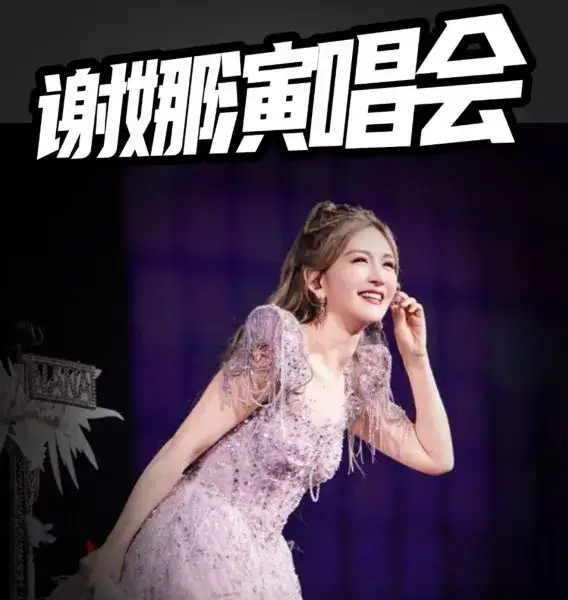
Beyond the issue of trust, many critics questioned whether Xie Na’s musical abilities justify the scale and pricing of a national concert tour. Although she has released several albums throughout her career, public opinion has long been divided regarding her credentials as a professional singer. Music critics argue that her vocal skills fall short of the standards typically associated with major concert tours and that she lacks a catalogue of widely recognized hit songs. In online discussions, some commentators mocked the performances as being closer to a fan gathering or variety show than a high-level musical event.
With prices comparable to those charged by established professional singers, critics questioned whether audiences were paying for a quality musical performance or for the opportunity to see a popular television personality. Moreover, the concerts relied heavily on celebrity guests. Friends and colleagues from the entertainment industry, including well-known actors, singers, and television personalities, have reportedly played a significant role in attracting audiences and generating buzz. Critics described this as leveraging personal connections rather than musical achievements, arguing that the concerts derive much of their appeal from guest appearances rather than Xie Na’s own repertoire.
Public reaction was further intensified by the way the tour was promoted. During a highly anticipated elimination segment on Ride the Wind 2026, Xie Na used her hosting role to announce the concert tour, a move that many viewers considered inappropriate. Critics accused her of turning a public entertainment platform into a vehicle for personal commercial promotion, arguing that the announcement distracted attention from other participants and the program itself. Additional promotional efforts across multiple television shows on the same day reinforced the perception that viewers were being subjected to an aggressive marketing campaign.
Despite the strong criticism, Xie Na continues to have substantial support. Defenders argue that concerts are ultimately a market-driven activity and that consumers are free to decide whether a performance is worth the price. From this perspective, fans who choose to purchase tickets are paying not only for music but also for memories, nostalgia, and emotional connection. Supporters contend that outsiders have no right to dictate how others spend their money.
Others point out that the tour has received the necessary regulatory approvals and follows established industry procedures. They also note that audiences at the Chengdu concerts reportedly responded enthusiastically, suggesting that the performances delivered significant emotional value to attendees regardless of professional critics’ opinions.
Supporters further emphasize that Xie Na has long maintained a parallel identity as a singer alongside her work as a television host. They argue that many performers with less musical output have successfully staged concerts without attracting similar levels of scrutiny. In their view, Xie Na’s exceptionally high public profile makes her an easier target for criticism, creating a potential double standard.